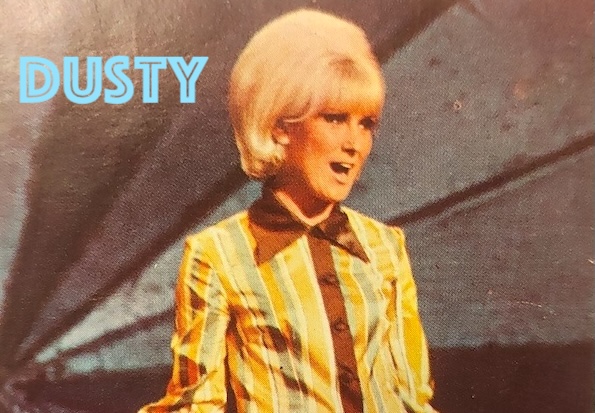
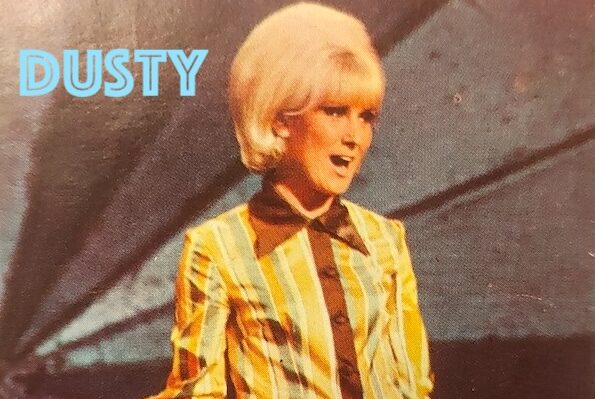
For a long time, it was a song in desperate need of an English lyric. But it became Dusty Springfield’s most successful single. Tony Barrell explains
SONG STUDY, 2020
Early in 1965, Dusty Springfield attended a song festival in Sanremo, on the coast of Liguria in Italy, where the blonde British singer was moved to tears by one of the tunes performed, despite the fact that the lyrics were in Italian and mystifying to her. The song was ‘Io che non vivo (senza te)’, written by Vito Pallavicini and Pino Donaggio, and for a while after the festival, Springfield entertained the idea of recording it with an English lyric, if she could find one. She mentioned the idea to her friend Vicki Wickham, known for producing the hip British music TV show Ready Steady Go!
I spoke to Vicki Wickham in 2018, and she recalled: “Dusty had been sitting on this song for ages, and every time she was going to record it she’d say, ‘Oh, I’ll do lyrics,’ and she never did. And it must have been the third time she’d said exactly the same thing when I said, ‘Oh, come on, Anybody can write lyrics.’ I took the Italian demo recording with me, and my friend Simon Napier-Bell came over for dinner, and I said, ‘Simon, we have to write a lyric. You’re more musical than I am, I haven’t a clue, but I’ve told Dusty we can do it.’ ” Napier-Bell is well known now for managing a string of successful artists, including Marc Bolan, Wham! and Ultravox, but in the 1950s he had harboured ambitions to be a professional musician himself.
The lyrics are dreadful. We cannot send these over to Dusty
Wickham and Napier-Bell applied themselves to the task. It may have helped that they were close contemporaries of the singer: they were around 27, and Dusty would soon reach that age too. As Vicki Wickham remembered, “We sat there coming up with things. We didn’t want a lyric saying ’I love you,’ because we both hated that sort of thing, so we decided to make it negative. We finished the lyrics over dinner, and I typed them up the next morning, called Simon and said, ‘They are dreadful. We cannot send these over to Dusty. And he said, ‘Well, what are we going to do? She’s going to be in the studio in two hours.’ I said, ‘You’ve got to write something else.’ He said, ‘I can’t – I’ve got a meeting.’ So I took them to the studio, where Dusty looked at them and said, ‘Oh God, they’re dreadful. But I’ll have to do it – they’re better than nothing.’ ”
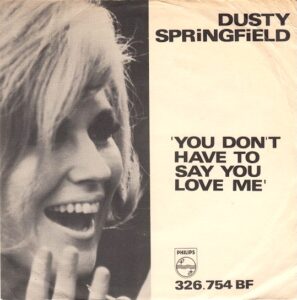
It was March 1966 and they were at a recording facility in Stanhope Place, the famous Philips studio near Marble Arch in London, which had been used by artists including the Who and the Walker Brothers. Springfield had recently recorded her 1965 album Everything’s Coming up Dusty here. The backing track for the new single had already been recorded, and now there was an English lyric and a new title: ‘You Don’t Have to Say You Love Me’. But even in a familiar and well-equipped studio like this, it wasn’t always easy for her to find the right vocal sound, which she was known to be fussy about. Her initial attempts to record the song were declared unsatisfactory, but the engineer Peter Olliff happened to be returning to the studio when he heard her voice echoing in the stairwell, and had a brainwave. A microphone was suspended above the stairs and Dusty recorded the song there, nailing another of her great performances – though characteristically she endured dozens of takes before she was happy.
The best acoustics she ever got in that studio were in the loo
“In those days, they had these big echo chambers in the studio,” said Wickham, “and they were great for putting echo on the voices, but I’m not sure how well you could actually control them. So Dusty used different areas of the studio where there was a natural echo. The best acoustics she ever got in that studio were in the loo – the bathroom had a great sound. And I think she ended up doing some of the vocals for that song there.”
I would quibble with the idea that the lyrics of ‘You Don’t Have to Say You Love Me’ are dreadful. The original Italian song, whose title translates as ‘I Who Can’t Live without You’, was about a lover facing a romantic split, and complaining that life would be impossible after it. But the English lyric is a subtle and nuanced thing, in which the narrator seems to be anxious not to deter the lover by being possessive and “tying them down”. I think it’s sophisticated and poignant, and very Sixties with its understated free-love vibe.
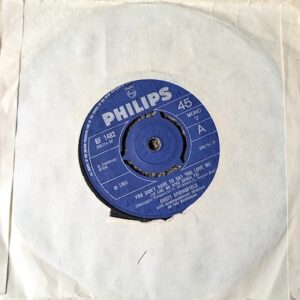
Incidentally, I believe it’s likely that Wickham and Napier-Bell framed the chorus in the second person, beginning it with “You”, because they misunderstood the “Io” at the start of the Italian title – which, despite its sound, means “I”. But the error led them in an interesting direction, and the success of the end result speaks for itself. The single went to the top of the British charts, and it was so popular in the USA that her latest album was rereleased there with the song added and the LP title changed to You Don’t Have to Say You Love Me. People loved it, and they said so. ♦
© 2026 Tony Barrell
Sadly, Vicki Wickham passed away in July 2026.
Here is a clip of Dusty Springfield performing the song.
Tony Barrell is a widely published writer and the author of a series of books on music. His acclaimed book The Beatles on the Roof has sold well in the UK, USA, Australia and Japan.





0 comments found
Comments for: LOST FOR WORDS